High Visibility Workwear: Essential Checklist for Safety and Compliance
Before You Buy: Understanding Standards & Risk Levels
Let's be straight with each other. Buying high visibility workwear isn't just about picking the brightest vest on the shelf. Get this wrong, and you're putting lives at risk—your team's lives. And in North Dublin, where construction sites hum alongside busy roads and industrial estates, the stakes are high.
So before you spend a euro, you need to understand what you're actually buying.
Know Your EN ISO 20471 Class
This is non-negotiable. EN ISO 20471 is the European standard that governs hi-vis clothing. It breaks down into three classes, and each one matters for different situations:
- Class 1 – Minimum visibility. Think off-road tasks, low traffic speeds, or workers away from moving vehicles. Honestly, this is rarely enough for most outdoor jobs.
- Class 2 – The sweet spot for most construction, road work, and warehouse environments. Provides moderate coverage with retroreflective tape on the torso. If you're buying safety workwear North Dublin for general site use, start here.
- Class 3 – Maximum visibility. Full coverage with tape on arms, torso, and legs. Required for high-speed roads, night work, or emergency responders. You'll know if you need this—your risk assessment will tell you.
Every garment must carry the CE mark and clearly state its EN ISO 20471 class. If it doesn't, don't buy it. Simple as that.
Assess Your Work Environment
Here's where most companies slip up. They buy one type of hi-vis and assume it covers everyone. But your work pants for men on a quiet building site face different risks than someone working beside the M50 at night.
Ask yourself: What's the traffic speed? Is lighting poor? Do workers face rain, fog, or dawn/dusk conditions? Are there moving machinery or forklifts nearby? Each answer pushes you toward a different class or additional features like waterproof membranes or extra tape coverage.
From experience, most companies skip this step. Don't be most companies.
The 5-Point Visibility Checklist
Once you've nailed down the class and environment, it's time to get specific. Here's a practical checklist you can run through before ordering high visibility workwear for your crew:
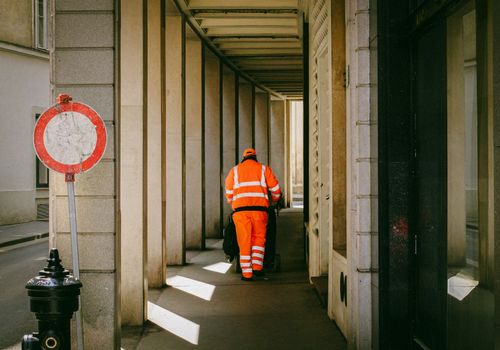
Colour & Background Material
- Fluorescent yellow-green – Best for daylight visibility against dark backgrounds like tarmac, concrete, or woodland. The most common choice for construction sites.
- Fluorescent orange-red – Stands out against green foliage, grass, or rural settings. Popular for road maintenance and forestry work.
- Fluorescent red – Reserved for emergency services and specific high-risk environments. Less common in general construction.
The background material itself matters too. Cheap fabrics fade fast under Irish UV light (yes, we get sun sometimes). Look for fabrics that retain their fluorescent colour after multiple washes—or you'll be replacing gear every three months.
Retroreflective Tape Coverage
This is where the magic happens. Retroreflective tape bounces light back toward its source—that headlight coming down the road—making your worker visible in darkness.
- Width matters: Tape must be at least 50 mm wide. Narrower tape won't meet EN ISO 20471 standards.
- Placement: You need tape on the torso (horizontal bands), arms (around biceps), and for Class 3, legs too. The goal is 360° visibility—so someone approaching from any angle sees the reflection.
- Durability test: Before you bulk order, wash a sample garment three times. If the tape peels, cracks, or curls at the edges, reject the batch. I've seen too many companies burn money on tape that fails after one industrial wash.
Comfort & Durability for All-Weather Work
Look, if your high visibility workwear isn't comfortable, your workers won't wear it properly. They'll leave jackets unzipped, roll up sleeves, or ditch the vest entirely. That's a safety failure before the day starts.
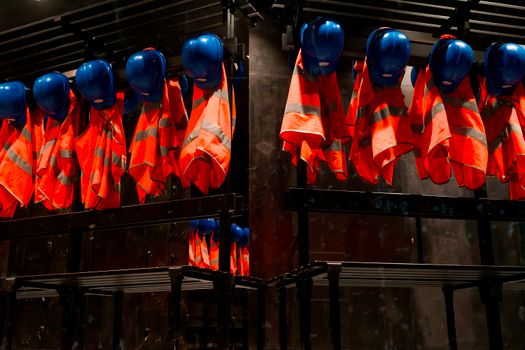
Breathability vs. Waterproofing
This is a constant tug-of-war. A fully waterproof jacket keeps rain out—but traps sweat inside. A breathable fabric lets moisture escape but might not hold up in a downpour.
For outdoor work in North Dublin, where you can get four seasons in one afternoon, look for garments with laminated membranes that offer both waterproofing (minimum 5,000 mm hydrostatic head) and breathability (minimum 5,000 g/m²/24h). Brands that get this right include Portwest, Snickers, and Carhartt—all available through logowear.ie.
Reinforced Stress Points
Construction sites destroy clothing. It's a fact. Elbows, shoulders, knees, and seat areas take the worst punishment. Look for double-stitched seams and reinforced panels at these stress points. If you're buying work pants for men, check for knee pad pockets (they're a game-changer for kneeling work) and reinforced hems that don't fray after a month.
And don't forget the little things: adjustable cuffs that don't snag on machinery, waistbands that accommodate layers underneath, and hoods that fit over hard hats without restricting vision.
Customisation & Branding: Stay Visible, Stay Professional
Here's something most competitors won't tell you: custom logo embroidery can actually enhance visibility—if you do it right. A branded crew looks professional, builds team identity, and makes your workers instantly recognisable on site.
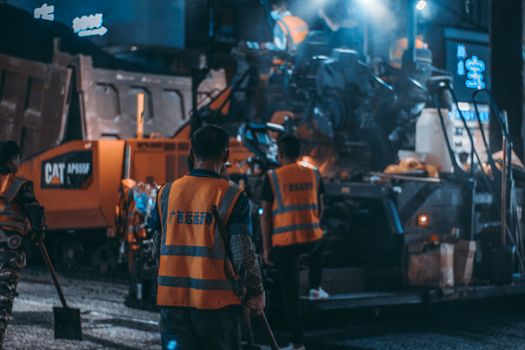
Embroidery vs. Heat-Transfer Logos
Both methods work, but they serve different purposes:
| Method | Best For | Durability | Visibility Impact |
|---|---|---|---|
| Embroidery | Front chest logos, small designs | Excellent—lasts the life of the garment | Low risk of covering tape |
| Heat-transfer | Large logos, full-colour designs | Good—but can peel after 20+ washes | Can include reflective elements |
At logowear.ie, we offer both options. For high visibility workwear, I generally recommend heat-transfer logos that incorporate reflective material—they blend with the garment's safety features rather than competing with them.
Placement That Doesn't Compromise Safety
This is critical. Never place a logo over retroreflective tape. That tape is there for a reason—to save lives. Covering it with branding defeats the purpose.
Safe placement options include:
- Chest area (left or right, above any tape bands)
- Upper back (between shoulder blades, above tape)
- Lower back (below tape, near hem)
Never put logos on sleeves, cuffs, or collars—these areas move constantly and can distort the design. And always order a sample garment first. Test how the logo looks after industrial laundering. If it fades or peels within 10 washes, you've wasted money.
Care & Replacement Schedule
You've spent good money on high visibility workwear. Now protect that investment. Most companies treat hi-vis like disposable gear—wash it with everything else, throw it in a hot dryer, and wonder why it stops working after three months.
Washing Guidelines
- Wash separately – Hi-vis picks up lint and dyes from other clothing, dulling its fluorescent colour.
- Max 40°C – Hot water degrades both the fluorescent dye and the reflective tape adhesive.
- No fabric softeners – They coat the fibres and reduce reflectivity. Use a mild detergent instead.
- Air dry – Tumble dryers are the enemy. High heat cracks tape and shrinks fabrics. Hang garments in the shade.
When to Retire a Garment
High visibility workwear has a limited lifespan. Even with perfect care, it degrades. Here's when to replace it:
- Faded colour – If the fluorescent background no longer pops against a typical work environment, it's done.
- Cracked or peeling tape – Reflective tape that's damaged won't bounce light properly. Replace immediately.
- Frayed edges or holes – These compromise both visibility and structural integrity.
- After 6–12 months of heavy use – For daily construction work, plan to replace every 6 months. For lighter use, 12 months is reasonable.
Keep a simple log of purchase dates and expected replacement dates. This helps you plan reorders from logowear.ie so you're never caught short. And while you're at it, check your safety boots Ireland stock too—footwear degrades on a similar timeline.
Remember: high visibility workwear isn't a one-time purchase. It's an ongoing commitment to your team's safety. Use this checklist, stay compliant, and keep your workforce visible—every shift, every season.
Need help selecting the right gear? Logowear.ie stocks certified hi-vis from all major brands and offers custom logo embroidery to match your company colours. We serve workwear Dublin businesses across North Dublin and beyond. Get in touch—we'll sort you out.
Najczesciej zadawane pytania
What is the primary purpose of high visibility workwear?
The primary purpose of high visibility workwear is to make workers easily noticeable in low-light or high-risk environments, reducing the risk of accidents by ensuring they are seen by vehicle operators, machinery handlers, or other personnel.
What are the key features to look for in compliant high visibility workwear?
Key features include fluorescent background colors (like yellow, orange, or red), retroreflective strips for visibility in darkness, adherence to safety standards (e.g., ANSI/ISEA 107 or EN ISO 20471), proper fit, and durability for the specific work environment.
How do I choose the right class of high visibility workwear for my job?
Choose based on risk level and environment: Class 1 for low-risk areas with minimal traffic (e.g., parking attendants), Class 2 for moderate-risk zones (e.g., warehouse workers or roadside construction), and Class 3 for high-risk areas with fast-moving traffic (e.g., highway workers or emergency responders).
Can high visibility workwear lose its effectiveness over time?
Yes, effectiveness can degrade due to fading from sun exposure, dirt buildup, wear and tear, or improper washing. Regular inspection for color fading, damaged reflective strips, or reduced brightness is essential to maintain compliance and safety.
What are common mistakes to avoid when using high visibility workwear?
Common mistakes include wearing dirty or faded garments, failing to fasten all closures (e.g., zippers or buttons that obscure reflective material), layering non-compliant clothing over the workwear, or using the wrong class for the hazard level, which reduces visibility and safety.