Restaurant Uniforms Dublin: A Complete Checklist for Ordering Staff Apparel
Before You Start: Define Your Restaurant’s Uniform Needs
Let’s be honest—ordering restaurant uniforms Dublin style can feel like a minefield. You’ve got staff to manage, a brand to protect, and a budget that doesn’t stretch forever. But here’s the good news: a little planning upfront saves you from costly mistakes. This checklist is your shortcut to getting it right first time.
Assess Your Team Roles
- List every position – Front-of-house staff need different gear than kitchen crews. Servers might require aprons and button-downs, while chefs need heavy-duty coats and trousers. Don’t forget managers or baristas if you run a full-service spot.
- Count the bodies – How many people per role? Factor in part-timers and seasonal hires. Under-ordering means scrambling later; over-ordering wastes money.
- Plan for rotation – Each employee needs at least 2–3 sets. Why? Because spills happen, laundry cycles are tight, and nobody wants to wear a stained shirt mid-shift.
Set a Realistic Budget
- Include branding costs – A €15 polo becomes €25+ after embroidery. Logowear.ie offers competitive pricing for Dublin restaurants, so get a quote that covers both garment and decoration.
- Don’t forget extras – Aprons, hats, non-slip shoes, and safety boots Ireland for kitchen staff all add up. Build a buffer of 10–15% for unexpected needs.
- Think long-term – Cheap uniforms fade and tear fast. Spending a bit more on quality workwear Dublin suppliers means fewer replacements over 12 months.
Choose the Right Fabric for Dublin’s Climate
Dublin weather is unpredictable—damp one minute, chilly the next. Your uniforms need to handle that without looking shabby after a few washes.
Breathability for Busy Shifts
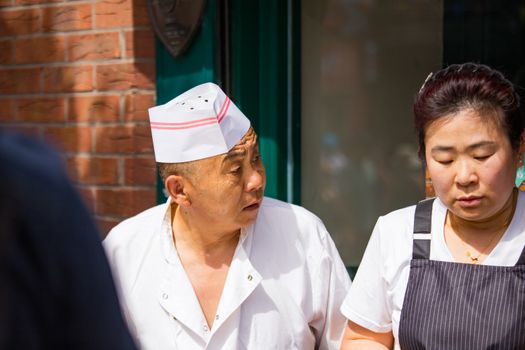
- Cotton-polyester blends win – A 65% polyester/35% cotton mix resists wrinkles and dries fast. Perfect for front-of-house staff who need to look crisp through a dinner rush.
- Avoid 100% cotton shirts – They shrink, fade, and hold moisture. In Dublin’s humidity, that’s a recipe for uncomfortable staff and constant replacements.
- Consider moisture-wicking fabrics – For kitchen teams sweating over hot stoves, performance blends from Logowear.ie keep them cooler and drier.
Durability for Frequent Washing
- Polycotton twill for kitchen staff – This fabric stands up to commercial detergents and high heat. It’s also stain-resistant—critical when dealing with oil and sauce splatters.
- Flame-resistant options matter – If your kitchen uses open flames, invest in FR-rated chef coats. It’s not just smart—it’s a safety workwear North Dublin requirement you can’t ignore.
- Test a sample first – Order a single garment from your supplier and wash it three times. If it pills or fades, reject it. Logowear.ie lets you test before committing to bulk orders.
Select a Style That Matches Your Brand Identity
Your uniforms are walking advertisements. They should scream your brand’s personality—whether that’s upscale Italian or trendy gastropub.
Classic vs. Modern Cuts
- Front-of-house: polos or button-downs? – Polos from Logowear.ie offer a smart-casual look with full customization. Button-downs work better for fine dining. Waistcoats add a vintage touch but require dry cleaning.
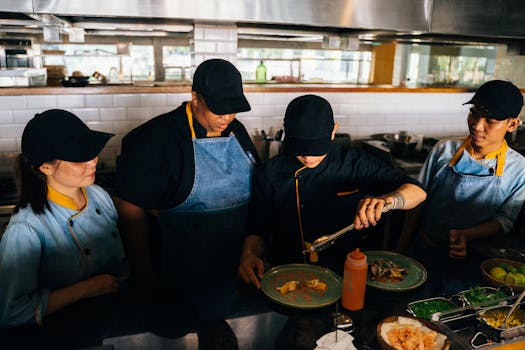
- Kitchen staff: chef coats with style – Double-breasted coats look professional and hide stains better. Aprons with pockets keep tools handy—no more digging for thermometers mid-service.
- Don’t forget non-slip shoes – They’re not technically “uniforms,” but they’re essential. Pair them with work pants for men that have reinforced knees for durability.
Color Coordination
- Dark colors hide stains – Black, navy, and charcoal are your friends. They also complement most restaurant logos without clashing.
- Match your interior – If your dining room uses warm tones (terracotta, gold), choose uniform colors that blend. Cool tones (grey, blue) suit modern minimalist spaces.
- Use contrast for visibility – High visibility workwear accents on aprons or trim can help staff spot each other in crowded kitchens. It’s practical and adds a safety element.
Get the Perfect Fit for Every Team Member
Nothing kills morale faster than an ill-fitting uniform. Too tight and staff can’t move; too loose and they look sloppy. Here’s how to nail the fit.
Size Ranges and Ordering Samples
- Request a detailed size chart – Logowear.ie provides measurements for chest, waist, and inseam on all their restaurant uniforms Dublin items. Don’t guess—measure your staff.
- Order samples for key staff – Before dropping €1,000 on bulk orders, buy one or two samples. Have your tallest and shortest team members try them on. This catches fit issues early.
- Consider unisex vs. gender-specific cuts – Many Dublin restaurants now offer both. Women’s cuts often have narrower shoulders and shorter torsos, which improves comfort and appearance.
Accommodating Different Body Types
- Stock multiple sizes – From XS to 5XL, ensure your supplier can cover your whole team. Logowear.ie carries extended sizing for most garments.
- Think about mobility – Kitchen staff need room to reach and bend. Choose cuts with gusseted underarms or stretch panels.
- Allow for layering – Dublin winters are cold. Make sure jackets and vests fit over base layers without looking bulky.
Brand Your Uniforms with Embroidery or Printing
This is where your uniforms go from generic to branded. But which method works best for your restaurant?
Embroidery vs. Screen Printing
- Embroidery lasts longer – Thread doesn’t crack or peel like ink. It looks premium on polo shirts, chef coats, and aprons. Logowear.ie specializes in custom embroidery for Dublin businesses—their work holds up to industrial washing.
- Screen printing for large designs – If your logo has gradients or fine details, printing might be better. But it can crack after 20–30 washes, especially on aprons that get scrubbed.
- Cost comparison – Embroidery costs more per piece (€5–€10 extra) but lasts years. Printing is cheaper upfront but may need redoing annually. For restaurant uniforms Dublin that see heavy use, embroidery wins on value.
Logo Placement
- Left chest for shirts – This is standard and professional. It’s where customers naturally look.
- Center back for jackets – Great for visibility when staff walk through the dining room. Think of it as mobile advertising.
- Front pocket for aprons – Keeps the logo visible even when staff are bent over tables. Plus, it doesn’t interfere with pocket functionality.
Finalize Your Order with a Trusted Dublin Supplier
You’ve done the planning. Now it’s time to pull the trigger. But choosing the right supplier is just as important as picking the right uniforms.
Lead Times and Minimum Orders
- Confirm production time – Most embroidery orders take 7–10 business days. Logowear.ie offers fast turnaround for Dublin restaurants—sometimes as quick as 5 days for rush jobs.
- Check MOQs – Many suppliers require 10+ pieces per design. If you only have 3 kitchen staff, ask about split orders or pay a small setup fee.
- Plan for delays – Order 3–4 weeks before you need the uniforms. Fabric shortages, thread color issues, or machine breakdowns can push timelines.
After-Sales Support
- Ask about reordering – Will the same fabric and thread colors be available in 6 months? Some suppliers change stock without notice. Logowear.ie keeps records of past orders so you can reorder exact matches.
- Warranty policies – What happens if a seam splits after 2 washes? A good supplier replaces defective items free of charge.
- Bulk discounts for future orders – Once you’re a regular customer, negotiate better rates. Loyalty pays off when you’re outfitting a growing team.
Final thought: Ordering restaurant uniforms Dublin doesn’t have to be stressful. Follow this checklist, partner with a reliable supplier like Logowear.ie, and you’ll have a team that looks sharp, feels comfortable, and represents your brand with pride. For more tips on Dublin workwear and custom uniforms, check out our guide to essential custom workwear for small businesses—it covers everything from fabric choices to branding strategies that actually work.
Najczesciej zadawane pytania
What factors should Dublin restaurants consider when ordering staff uniforms?
Dublin restaurants should consider durability for high-traffic environments, breathability for kitchen heat, brand consistency with the restaurant's theme, and compliance with health and safety regulations. Local climate and the need for easy cleaning are also important.
Are there specific style trends for restaurant uniforms in Dublin?
Yes, trends in Dublin often include modern, minimalist designs with neutral colors like black, navy, or gray, sometimes accented with earthy tones. Many restaurants opt for aprons, branded polo shirts, and comfortable, non-slip footwear to blend professionalism with practicality.
How can restaurants in Dublin ensure their uniforms are cost-effective?
Ordering in bulk from local suppliers can reduce costs. Choosing durable, easy-care fabrics like cotton blends reduces replacement frequency. Also, selecting classic styles avoids frequent redesigns, and some Dublin suppliers offer package deals for full staff sets.
What are the key items in a complete restaurant uniform checklist for Dublin establishments?
A complete checklist typically includes branded shirts or blouses, aprons, trousers or skirts, non-slip shoes, chef coats for kitchen staff, and optional items like hats, ties, or jackets. It should also cover sizing for all staff and laundering instructions.
Why is it important to choose local suppliers for restaurant uniforms in Dublin?
Local suppliers in Dublin offer faster delivery, easier communication, and the ability to see samples in person. They also understand local climate needs and can provide customized embroidery or printing for branding, while supporting the local economy.