Safety Boots Ireland: The Complete Checklist for Buying Durable Footwear
Before You Start: Know Your Workplace Risks
Buying safety boots in Ireland isn't something you should rush. Honestly, most people grab the first pair that fits and regret it three months later when the sole peels off or the toe cap starts rusting. Before you even look at boots, you need to understand what you're protecting against.
Assess Your Hazard Level
- Identify specific hazards: Are you dealing with impact risks from falling objects? Compression hazards from heavy machinery? Punctures from nails on construction sites? Slips on wet or oily floors? Chemical exposure? Electrical risks? Each hazard demands different boot features. A warehouse worker and a roofer have completely different needs.
- Check your workplace safety regulations: Ireland follows EN ISO 20345 standards for safety footwear. Your employer should have a risk assessment document that specifies required protection levels. If they don't, ask your safety officer. It's not optional.
- Determine required safety level: Boots are rated S1, S2, S3, or specialized like S1P or S3 CI. S1 is basic safety with antistatic properties and energy absorption at the heel. S2 adds water resistance. S3 includes water resistance and puncture resistance. Know which level applies to your job before you spend a cent.
One quick note: if you work outdoors in Irish weather (which means rain, mud, and more rain), don't even consider anything below S3. You'll thank me later.
Checklist Item 1: Verify Safety Certification and Standards
This is where most buyers slip up. They see "safety boots" on a label and assume they're all the same. They're not. Not even close.

Look for the CE Mark and EN ISO 20345
- Ensure boots carry a CE mark and comply with EN ISO 20345:2022: This is the latest standard (updated from the 2011 version). Boots without this certification aren't legally compliant for most workplaces in Ireland. Check the label inside the boot or on the box. If it's missing, walk away.
- Check additional ratings: SRA means slip resistance on ceramic tile with detergent. SRC is the highest slip resistance rating (tested on both ceramic tile with detergent and steel with glycerol). For Irish conditions, SRC is non-negotiable. Wet concrete, muddy sites, and greasy floors demand it.
- For electrical hazards: Look for ESD (electrostatic discharge) ratings if you work with sensitive electronics, or EH (electrical hazard) ratings for electricians. Standard steel toe caps can conduct electricity in certain conditions, so don't assume your boots protect you from shocks.
I've seen workers buy cheap imports from online marketplaces that claim "safety" but have no certification. Those boots won't protect you. And if you're injured, your employer's insurance might not cover you if your footwear isn't certified.
Checklist Item 2: Get the Right Fit and Comfort Features
You'll wear these boots for 8, 10, maybe 12 hours a day. If they don't fit properly, your feet will hurt. Your back will hurt. And your productivity will tank. Fit matters more than brand, price, or style.
Size, Width, and Break-In Period
- Measure feet at the end of the day: Feet swell throughout the day, especially if you're on your feet. Measure in the afternoon or evening. If you measure in the morning, your boots will be too tight by lunchtime.
- Try boots with work socks and leave a thumb-width gap at the toe: Work socks are thicker than regular socks. Don't try boots with thin dress socks. And that thumb-width gap? It prevents your toes from hitting the front of the boot when you walk downhill or when your feet swell. It's essential.
- Look for removable insoles, padded collars, and moisture-wicking lining: Removable insoles let you replace them with orthotics if needed. Padded collars prevent blisters on your Achilles. Moisture-wicking lining (like mesh or Coolmax) pulls sweat away from your feet. Without it, you'll get fungal infections and smelly boots. Trust me, your coworkers will appreciate this one.
Break-in period matters too. Good leather boots need about a week to mould to your feet. If they hurt after two weeks, they're the wrong size or shape for you. Don't try to "break them in" if they're genuinely painful.
Checklist Item 3: Choose Durable Materials and Construction
Materials determine how long your boots last. Cheap materials mean buying new boots every six months. Quality materials mean two years or more. Do the math.
Leather, Synthetics, and Toe Caps
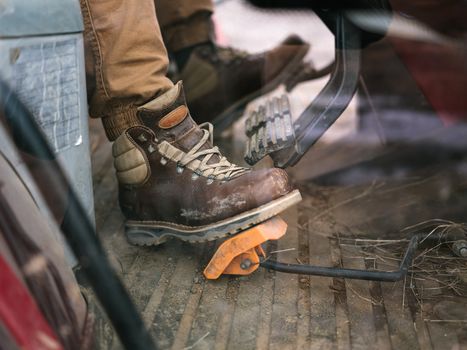
- Full-grain leather offers best durability; split leather is lighter but less waterproof: Full-grain leather is the top layer of the hide. It's tough, breathable, and develops a nice patina over time. Split leather (from lower layers) is cheaper and lighter but absorbs water faster. For Irish weather, full-grain leather with a waterproof membrane (like Gore-Tex or Sympatex) is ideal.
- Steel toe caps provide maximum protection; composite toe caps are lighter and non-metallic: Steel toe caps withstand up to 200 joules of impact (the standard). But they conduct cold and heat, and they set off metal detectors. Composite toe caps (made from Kevlar, carbon fiber, or fiberglass) are lighter, don't conduct temperature, and are airport-friendly. If you work in cold conditions, composite is more comfortable.
- Check for puncture-resistant midsoles (steel or Kevlar) if working on construction sites: A nail through the sole can ruin your week (and your foot). Steel midsoles are effective but heavy. Kevlar midsoles are lighter and flexible. Either works, but don't skip this feature if you're on a construction site, demolition job, or anywhere with debris on the ground.
One more thing: check how the sole is attached. Good boots have the sole welded or stitched to the upper. Cheap boots use glue alone. Glue fails in wet conditions. Stitching or welding doesn't.
Checklist Item 4: Select the Right Sole for Your Environment
The sole is what connects you to the ground. Get this wrong, and you'll slip, slide, and fall. Get it right, and you'll feel stable on any surface.
Traction, Oil Resistance, and Heat Resistance
- Rubber soles (e.g., PU/rubber dual-density) offer excellent slip resistance and durability: Polyurethane (PU) soles are lightweight and comfortable but can degrade in oily conditions. Rubber soles are heavier but more resistant to oil, chemicals, and heat. Dual-density soles combine a PU midsole for comfort with a rubber outsole for grip. That's the sweet spot.
- For oily or wet floors, choose SRC-rated soles with deep treads: Deep treads channel water and oil away from the contact surface, maintaining grip. Shallow treads are dangerous on wet surfaces. If you work in a kitchen, garage, or factory with oily floors, SRC rating is mandatory.
- Heat-resistant soles (HRO) are essential for foundries or asphalt work: HRO-rated soles withstand contact with hot surfaces up to 300°C. Regular soles will melt or deform. If you work with hot materials, this isn't optional.
And here's a practical tip from experience: check the sole pattern. Wide, spaced-out treads are better for mud and dirt (they self-clean). Tight, dense treads are better for smooth, wet floors. Choose based on your environment.
Where to Buy Safety Boots in Ireland: Top Suppliers Compared
You've got the checklist. Now where do you actually buy the boots? Here's a comparison of the main options in Ireland.
| Supplier | Strengths | Weaknesses | Best For |
|---|---|---|---|
| Logowear.ie | Curated range of certified boots, expert advice, fast delivery across Ireland, bulk discounts, custom embroidery for company branding | Smaller selection than massive online retailers, but all products are vetted | Businesses and individuals who want quality, personal service, and safety workwear North Dublin delivery |
| Screwfix.ie | Wide selection, competitive pricing, convenient click-and-collect | No expert fitting advice, limited premium options, no customization | DIYers and tradespeople who know exactly what they want |
| Toolstation.ie | Good range, online ordering, competitive prices | Similar limitations to Screwfix - no personal service or custom options | Quick replacements when you know your size and model |
| Specialist workwear stores | In-person fitting, knowledgeable staff, can try before buying | Limited stock, higher prices, fewer brands | First-time buyers who need professional fitting advice |
Look, if you're buying safety boots Ireland for yourself or your team, Logowear.ie is the smart choice. They don't just sell boots - they understand workwear Dublin conditions. Their team knows which boots work for Irish construction sites, warehouses, and factories. Plus, if you're kitting out a team, they offer bulk discounts and custom logo embroidery on associated workwear like high visibility workwear and work pants for men. You can get your entire team outfitted in one order, with your company logo on everything. That's the kind of service you won't get from a generic online retailer.
Final Checklist: Quick Reference
Here's your condensed checklist. Print it, save it, or screenshot it before you shop.
- Hazard assessment: Know your risks before buying
- Safety certification: CE mark + EN ISO 20345:2022 + appropriate ratings (SRC, S3, etc.)
- Proper fit: Measure at end of day, try with work socks, thumb-width gap at toe
- Comfort features: Removable insoles, padded collar, moisture-wicking lining
- Durable materials: Full-grain leather, steel or composite toe cap, puncture-resistant midsole
- Right sole: SRC-rated, deep treads, appropriate for your surface (HRO if needed)
- Trusted supplier: Logowear.ie for quality, service, and customization options
Don't cut corners on safety boots. Your feet carry you through every workday. They deserve proper protection. And if you're an employer, providing quality boots isn't just good practice - it's a legal obligation under Irish health and safety law. Get it right the first time, and your boots will last longer, protect better, and keep you comfortable through the toughest shifts.
Najczesciej zadawane pytania
What are the key safety standards to look for when buying safety boots in Ireland?
When purchasing safety boots in Ireland, look for the CE mark and EN ISO 20345 standard, which is the European safety footwear regulation. This ensures the boots meet minimum requirements for toe protection, slip resistance, and penetration resistance.
How do I choose the right sole material for safety boots in Ireland's wet climate?
For Ireland's wet conditions, opt for boots with a rubber or polyurethane (PU) sole that offers high slip resistance. Look for a deep tread pattern and materials rated for oil and water resistance to ensure durability on slippery surfaces.
What type of toe protection is best for safety boots in Ireland?
Steel toe caps are the most durable and offer high impact resistance, but composite toe caps are lighter and non-conductive, making them ideal for electricians or those needing metal-free options. Both meet EN ISO 20345 standards.
Can safety boots in Ireland be used for both work and outdoor activities?
Yes, many safety boots designed for Ireland are versatile, with waterproof membranes like Gore-Tex for wet conditions and insulated linings for cold weather. Look for boots with ankle support and rugged outsoles for hiking or construction sites.
How should I maintain my safety boots to ensure longevity in Ireland's damp environment?
Clean boots after each use to remove mud and salt, apply a waterproofing wax or spray regularly, and store them in a dry, ventilated area. Avoid drying them near direct heat sources, as this can crack the leather or soles.