Company Uniforms Ireland: The Ultimate Guide to Selecting the Right Apparel for Your Team
Why Company Uniforms Matter for Irish Businesses in 2026
Let's be honest. If you're running a business in Ireland today and you haven't thought about uniforms, you're leaving money on the table. Company uniforms Ireland are no longer just about covering your team – they're a strategic asset. Walk into any pub in Dublin, any construction site in Cork, or any hotel in Galway. The first thing you notice? The clothes. And that impression sticks.
Building Brand Identity Through Consistent Apparel
Think of your uniform as a mobile billboard. Every time your employee grabs a coffee, takes the bus, or serves a customer, they're advertising your brand. In 2026, with so much noise online, that physical presence matters more than ever. A well-designed polo with your logo embroidered on the chest does more for brand recall than a thousand social media posts.
And here's the thing – consistency builds trust. When a client sees the same logo, same colours, same quality across your entire team, they subconsciously register professionalism. That's worth its weight in gold.
Enhancing Team Unity and Professionalism
Uniforms do something else, too. They level the playing field. The new hire and the veteran manager wear the same shirt. That builds camaraderie fast. I've spoken to dozens of team leaders across Dublin who swear their teams perform better when everyone's dressed the same. It's not magic – it's psychology. When you look the part, you act the part.
"Our team morale jumped noticeably after we introduced branded workwear. Customers started treating us differently too – more respect, more trust." – Operations Manager, Dublin-based logistics firm
Safety and Compliance in Irish Workplaces
Now, the serious bit. In sectors like construction, manufacturing, and hospitality, uniforms aren't optional – they're the law. Safety workwear North Dublin standards require specific materials, reflective strips, and flame-resistant properties. Ignore this at your peril. Fines are hefty, and worse, you're risking lives. Always check that your uniforms meet Irish and EU safety standards before ordering.
Choosing the Right Fabric for Irish Weather and Work Demands
Irish weather is a fickle beast. One minute it's pouring, the next it's sunny enough to peel off layers. Your fabric choice needs to handle that chaos. Here's what works and what doesn't.
Breathable Cotton vs. Durable Polyester Blends
Pure cotton feels great but shrinks, fades, and takes forever to dry. Polyester is tough but can make you sweat like a racehorse. The sweet spot? A cotton-polyester blend. It breathes, dries fast, and holds up to repeated washing. For year-round wear in Ireland's variable climate, this is your go-to.
Look for blends around 65% polyester, 35% cotton. They're comfortable enough for the office, tough enough for the warehouse, and handle our damp summers without turning into a soggy mess.
High-Visibility Materials for Outdoor Workers
If your team works near traffic, on construction sites, or in low-light conditions, high visibility workwear is non-negotiable. The fabric must meet EN ISO 20471 standards. That means specific levels of fluorescent background material and reflective tape. Don't cut corners here – a cheap vest that fades after three washes is a liability.
Modern hi-vis fabrics have improved massively. They're lighter, more breathable, and come in styles that don't scream "road worker" – think polo shirts with subtle reflective panels for delivery drivers, or bomber jackets with hi-vis trim for site supervisors.
Stain-Resistant and Easy-Care Options for Busy Teams
Hospitality and tradespeople know the struggle. Coffee spills, paint splatters, grease marks – it's part of the job. Stain-resistant finishes on polo shirts or aprons reduce replacement costs dramatically. Some fabrics now come with permanent moisture-wicking and stain-repellent coatings that survive dozens of washes.
For busy teams, easy-care means no ironing. Look for "wrinkle-resistant" labels. Your employees will thank you, and your uniforms will look crisp at 6 PM as they did at 9 AM.
Essential Uniform Categories for Different Industries
Not all uniforms are created equal. Here's a breakdown of what works best for different sectors in Ireland.
Corporate and Office Attire: Polo Shirts and Blazers
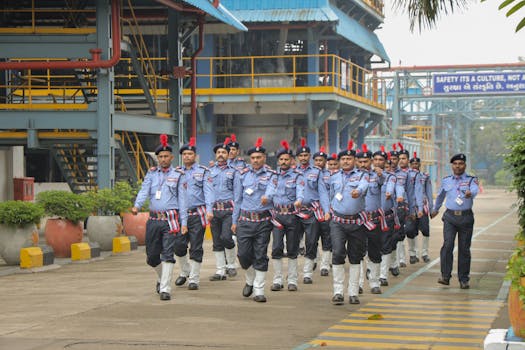
For the corporate crowd, company uniforms Ireland often start with embroidered polo shirts. They're professional without being stuffy. Add a branded blazer or cardigan for cooler months. The key is fabric quality – cheap polos look faded and shapeless after a few washes. Invest in pique cotton or performance blends that hold their shape.
Hospitality Uniforms: Aprons, Chef Coats, and Server Wear
Restaurants and hotels need uniforms that look sharp under harsh lights and survive constant movement. Aprons should be heavy-duty cotton or poly-cotton with reinforced stitching. Chef coats need double-breasted designs to hide stains (yes, that's why they overlap). Server wear should be wrinkle-resistant – nobody has time to iron between shifts.
Trades and Construction: Hi-Vis Vests, Coveralls, and Safety Trousers
This is where durability reigns supreme. Work pants for men in construction need reinforced knees, multiple pockets, and fabric that shrugs off abrasion. Coveralls should have zip-front closures and elasticated waists for comfort. Always pair with safety boots Ireland compliant with EN ISO 20345 – steel toe caps and slip-resistant soles are standard.
For outdoor workers, add waterproof outer layers. Irish rain doesn't care about your schedule.
Healthcare and Cleanroom Apparel: Scrubs and Lab Coats
Healthcare uniforms have specific needs: antimicrobial properties, easy laundering at high temperatures, and comfortable fits for long shifts. Scrubs should have plenty of pockets for tools and devices. Lab coats need to be fluid-resistant. Many suppliers now offer eco-friendly options made from recycled polyester – worth considering for sustainability-minded practices.
Branding Your Uniforms: Embroidery, Printing, and Customization
Your logo is the star of the show. Get this wrong, and the whole uniform falls flat. Here's how to nail it.
Embroidery vs. Screen Printing: Which is Best for Your Logo?
Embroidery is the premium choice. It looks professional, feels substantial, and lasts for years. Perfect for polo shirts, jackets, and hats. The downside? It's more expensive and doesn't work well for tiny text or highly detailed gradients.
Screen printing is cheaper and great for large logos on t-shirts or hi-vis vests. Colours pop, and you can reproduce complex designs. But it fades over time, especially with frequent washing.
For most businesses, I recommend embroidery for front-of-house staff (reception, sales, management) and screen printing for back-of-house or temporary staff. Or mix both – embroidered chest logo with a printed back for maximum visibility.
Placement Options: Chest, Sleeve, Back, and Hat
Standard placement is left chest – about 10-12 cm wide for most logos. But don't stop there. Sleeve logos add a premium touch. Back logos (especially on jackets or vests) turn your team into walking billboards. Hats look great with small logos on the front or side.
Just remember: more logos = higher cost. Prioritise the most visible spots first.
Color Matching and Logo Digitizing for a Professional Finish
Here's where many companies trip up. Your logo on screen looks different from your logo stitched on fabric. Logowear.ie provides expert digitizing services to ensure your logo stitches perfectly on any garment. They match thread colours to your brand palette – something many cheap suppliers skip.
Always request a digitizing proof before production. Check that small text is legible and fine details don't get lost. Once approved, keep that digitized file for future orders – it saves time and money.
Top Uniform Suppliers in Ireland: What to Look For
Choosing a supplier is a big decision. Here's what to prioritise.
| Criteria | Why It Matters | What to Ask |
|---|---|---|
| Quality Assurance | Consistency across bulk orders | Can I see fabric samples before ordering? |
| Lead Times | Delays cost you money | What's your typical turnaround for embroidered orders? |
| Bulk Discounts | Save on large orders | What's the pricing tier for 50+ units? |
| Exchange Policy | Wrong sizes happen | What's your return window and process? |
Quality Assurance and Sample Policies
Never order blind. Request fabric samples to test durability, colour accuracy, and feel. A good supplier will send swatches or even a sample garment. If they hesitate, walk away. Workwear Dublin suppliers with strong reputations always offer this.
Bulk Ordering and Lead Times for Irish Businesses
Local suppliers like Logowear.ie often offer faster turnaround for Dublin clients – sometimes as quick as 5-7 working days for embroidered orders. Compare this to overseas suppliers where shipping alone can take weeks. For urgent orders (new team members, seasonal hires), local is king.
Why Logowear.ie Stands Out for Dublin-Based Teams
Full disclosure: I've worked with Logowear.ie on multiple projects. Their combination of embroidery expertise, wide range of workwear brands (from Portwest to Dickies), and consistent quality makes them a top choice. They understand Irish workplace requirements – from safety workwear North Dublin compliance to hospitality-specific fabrics. Plus, their digitizing service is top-notch. No pixelated logos, no colour mismatches.
Sizing and Fit: Getting It Right for Every Team Member
Nothing kills uniform adoption faster than bad fit. Here's how to avoid the nightmare of returns and unhappy employees.
Unisex vs. Gender-Specific Fits
Offer both. Unisex fits work for some, but women's fitted options accommodate different body shapes. Many suppliers now offer "women's cut" versions of standard styles – they're worth the extra cost for team morale.
Measuring Guide for Accurate Sizing
Provide a clear measuring guide with diagrams. Include chest, waist, hip, and inseam measurements. Better yet, include a disposable tape measure with sample orders. Encourage employees to measure themselves in their usual work clothes – not over bulky layers.
Handling Returns and Exchanges Efficiently
Set a clear policy upfront. Most good suppliers offer 14-30 day exchange windows. Logowear.ie handles exchanges smoothly – just keep tags on and garments unworn. For large teams, order one sample in each size first, then do a fitting session before placing the bulk order. This saves massive headaches.
Maintenance and Longevity: Keeping Uniforms Looking Professional
Your uniforms are an investment. Protect them.
Washing Instructions for Embroidered and Printed Garments
Embroidered logos hold up better to washing than printed ones. But both need care. Recommend gentle cycles with cold water, turning garments inside out. Air drying is best – high heat shrinks fabrics and cracks prints. For hi-vis items, avoid fabric softeners – they reduce reflectivity.
Repair and Replacement Cycles for High-Wear Items
Set a schedule. Hi-vis gear should be replaced every 12 months (or sooner if reflective tape peels). Polo shirts and trousers can last 18-24 months with proper care. Keep a stock of common sizes for quick replacements – nothing worse than a new hire wearing a faded hand-me-down.
Eco-Friendly Care Tips to Extend Uniform Life
Wash full loads to save water and energy. Use eco-friendly detergents. Repair small tears promptly – a quick stitch saves buying new. When uniforms finally retire, donate them to charity or recycle through textile programs. Many Irish suppliers now offer take-back schemes.
Budgeting for Company Uniforms: Cost-Saving Strategies
Uniforms cost money. But smart budgeting makes them affordable.
Bulk Discounts and Seasonal Sales
Ordering 50+ units often unlocks 10-20% discounts. Time your orders with end-of-season sales (January and July are prime). Logowear.ie runs regular promotions on bulk orders – worth checking their website.
Investing in Quality to Reduce Long-Term Costs
I know, cheap uniforms are tempting. But a €15 polo that fades after 10 washes costs more than a €30 polo that lasts 50 washes. Do the math. Higher-quality fabrics and embroidery may cost more upfront but lower your yearly spend significantly.
Tax Deductions for Workwear in Ireland
Here's a pro tip: many workwear expenses are tax-deductible. Uniforms with your company logo, safety boots, hi-vis vests – all qualify as business expenses. Consult with your accountant. You might be able to claim VAT back too, depending on your setup. Keep all receipts and invoices.
Key Takeaways and Next Steps
Choosing company uniforms Ireland doesn't have to be overwhelming. Start with these steps:
- Assess your needs: What industry are you in? What safety standards apply? What's your budget per employee?
- Order samples: Test fabrics, fits, and logo quality before committing to bulk.
- Partner with a reliable supplier: Logowear.ie offers embroidery, digitizing, and a wide range of workwear Dublin options – from high visibility workwear to corporate polos.
- Plan for maintenance: Set washing guidelines and replacement cycles to keep your team looking sharp.
- Budget smart: Invest in quality, buy in bulk, and claim tax deductions where possible.
Your team deserves uniforms that look good, feel comfortable, and represent your brand with pride. Get it right, and you'll see the difference in customer perception, employee morale, and your bottom line.
Ready to start? Logowear.ie is your one-stop shop for company uniforms Ireland – from consultation to delivery. Contact them today for a quote and samples. Your team will thank you.
Najczesciej zadawane pytania
Why should companies in Ireland invest in custom uniforms?
Company uniforms in Ireland help build brand identity, promote a professional image, and foster team unity. They also serve as a practical marketing tool and can improve customer recognition, especially for service-based businesses.
What factors should be considered when choosing uniform material for Irish weather?
Given Ireland's variable climate, prioritize breathable, moisture-wicking fabrics for comfort, and consider layering options like fleeces or waterproof jackets. Materials should be durable and easy to care for, as uniforms may face frequent washing.
How can I ensure my company uniforms comply with Irish workplace regulations?
Uniforms must meet safety standards if required (e.g., high-visibility gear for construction). Also, ensure they don't discriminate or cause discomfort, as per the Safety, Health and Welfare at Work Act. Consult a supplier familiar with Irish regulations.
What are the benefits of using an Irish-based uniform supplier?
Local suppliers often offer faster delivery, better understanding of cultural preferences, and compliance with Irish sizing standards. They may also provide more personalized service and support local economy.
How do I choose the right style of uniform for my team's specific industry?
Consider the work environment: for hospitality, opt for wrinkle-resistant, stain-proof fabrics; for healthcare, choose antimicrobial and easy-to-clean materials; for retail, focus on brand colors and modern cuts. Always involve employees in the selection process for better adoption.